
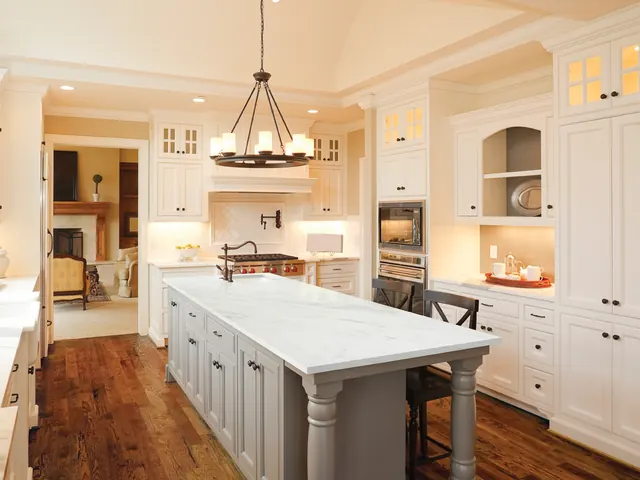
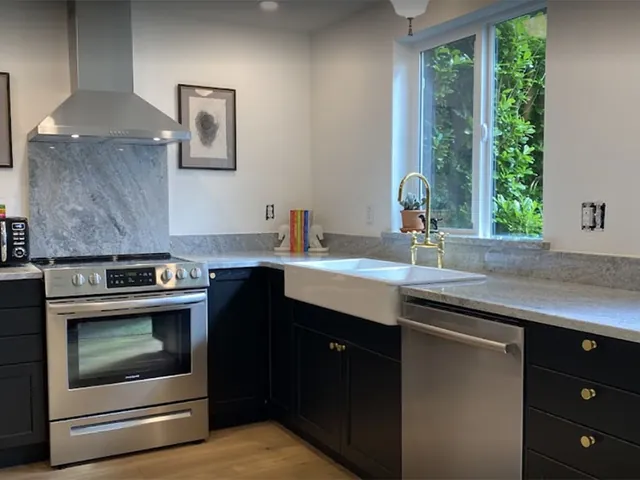
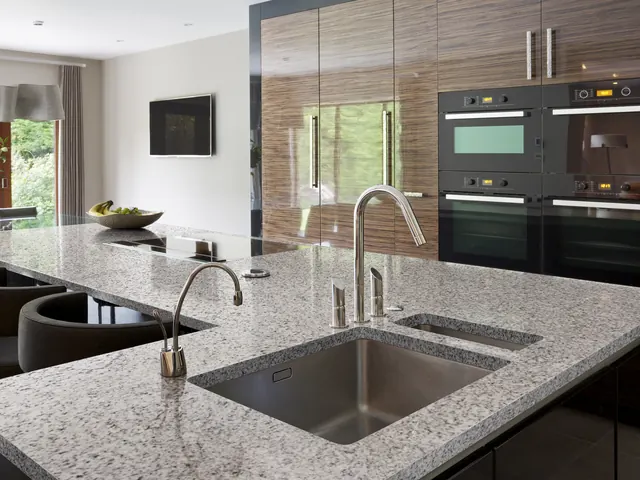


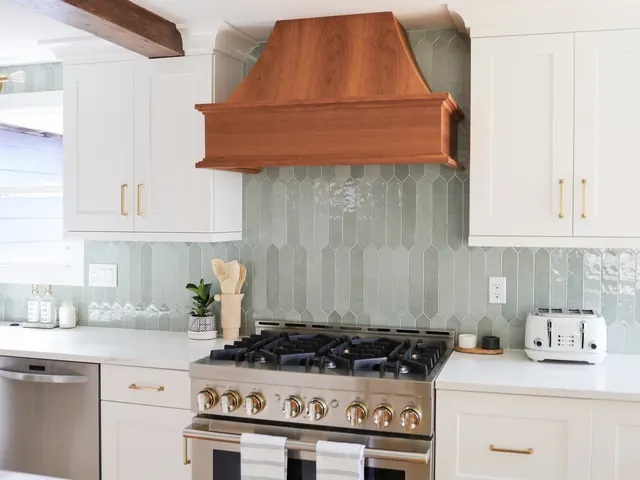
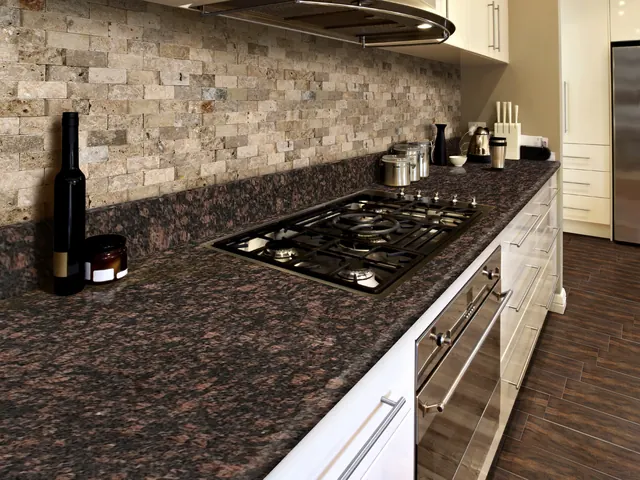
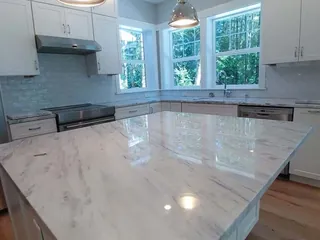

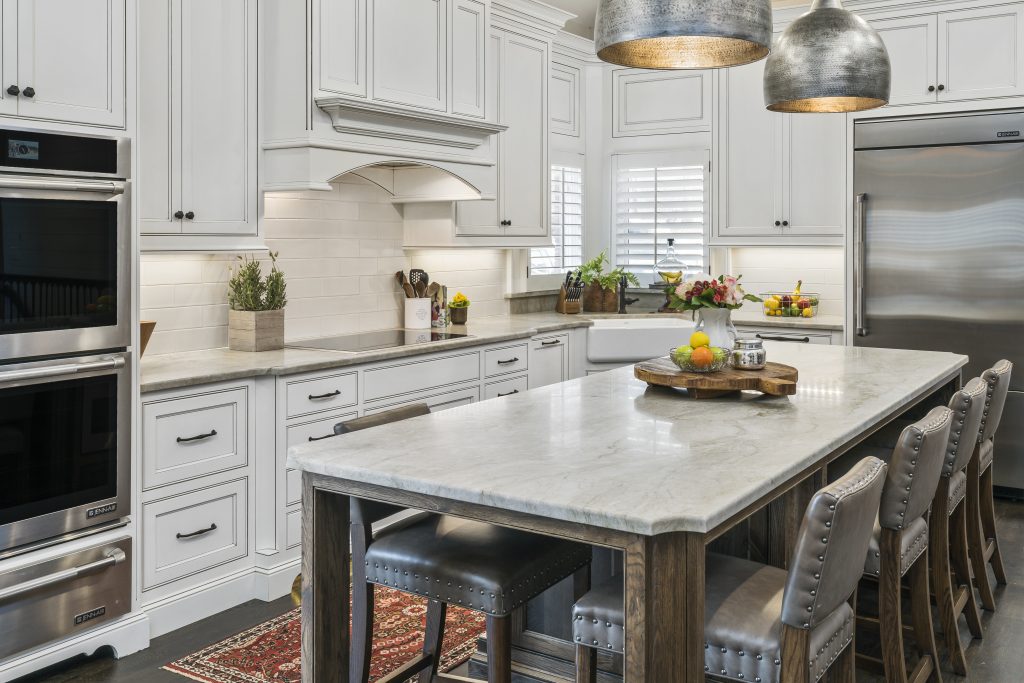
Two beautiful natural stones, two very different personalities. So how do you choose between granite and quartzite countertops?
While both are known for their durability, natural beauty, and long-lasting appeal, the differences go beyond appearance. From scratch resistance and maintenance to pricing and everyday performance, each material has something unique to offer.
When it comes to quartzite vs. granite countertops, understanding those differences can help you find the right fit for your home, lifestyle, and budget.
What Is the Difference Between Granite and Quartzite?
Although both are natural stones, granite and quartzite form through different geological processes.
Granite is an igneous rock formed as molten rock slowly cools beneath the Earth’s surface. Its combination of minerals, including quartz and feldspar, creates a wide variety of colors, patterns, and textures.
Quartzite is a metamorphic rock that begins as sandstone. Over time, intense heat and pressure transform it into an extremely hard stone composed primarily of quartz.
Unlike engineered quartz countertops, which contain mineral particles and binding resins, granite and quartzite are naturally formed materials. Each slab has unique characteristics, making every installation one of a kind.
Quartzite vs. Granite: Durability and Scratch Resistance
Both materials are excellent choices for busy kitchens, but they differ slightly in hardness.
Granite is highly durable and resistant to everyday scratches and wear. Quartzite is generally harder due to its high quartz content, giving it an advantage in scratch resistance.
However, neither material is indestructible. Both can chip along exposed edges if struck with enough force, and performance varies by stone.
Which is better? Quartzite generally offers greater scratch resistance, but both provide excellent durability for everyday kitchen use.
Heat Resistance: Can Granite and Quartzite Handle Hot Pans?
One advantage of natural stone is its ability to withstand elevated temperatures.
Both granite and quartzite offer excellent heat resistance, making them suitable for kitchens where cooking and baking are part of daily life.
However, sudden temperature changes or prolonged exposure to extreme heat can potentially damage the stone, its finish, or surface treatments.
Which is better? Both perform exceptionally well. Using trivets or hot pads remains the safest way to protect either countertop.
Granite vs. Quartzite: Appearance and Design Options
Appearance is often the deciding factor when selecting natural stone.
Granite: Variety and Natural Character
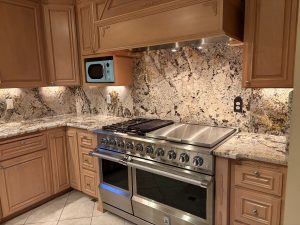
Granite comes in an impressive range of colors, from soft whites and warm neutrals to deep blacks, blues, and rich earth tones.
Some varieties feature subtle, consistent patterns, while others display dramatic movement and contrasting minerals. Depending on the material, granite may also be available in polished, honed, leathered, or brushed finishes.
Quartzite: Elegant Veining and Movement

Quartzite is often recognized for its flowing veins, layered patterns, and sophisticated appearance.
Varieties such as Taj Mahal and White Macaubas offer soft, neutral colors, while other quartzites feature striking blues, greens, and dramatic movement.
For a closer look at the variety natural stone has to offer, explore the quartzite collection at META Marble & Granite, one of our trusted stone distributors here in the Pacific Northwest.
Which looks better? That comes down to personal preference. Granite offers incredible variety, while quartzite is especially popular for its flowing veins and marble-like appearance.
Because natural stone varies from slab to slab, viewing full-size materials is important. A small sample may not fully represent the colors, patterns, or movement of the finished countertop.
Quartzite vs. Granite: Maintenance and Sealing

Both materials are relatively easy to maintain, but neither is completely maintenance-free.
Natural stone can absorb liquids, so sealing may be recommended to help prevent staining. However, porosity varies considerably between individual slabs.
Some granites are naturally dense and require minimal sealing, while certain quartzites may absorb liquids more readily despite their exceptional hardness.
Everyday Care for Both Materials
- Clean with a soft cloth and pH-neutral, stone-safe cleaner.
- Wipe up spills promptly, particularly oils, wine, and coffee.
- Avoid harsh chemicals and abrasive cleaning products.
- Use cutting boards and trivets.
- Follow the sealing recommendations for your specific stone.
For additional information, explore our natural stone countertop care guide.
Another consideration is etching, which occurs when acidic substances react with certain minerals. True quartzite is generally resistant to etching from common household acids, although some stones marketed as quartzite may contain acid-sensitive minerals.
Which is easier to maintain? Neither material automatically requires less maintenance. The specific stone’s porosity, finish, and recommended care are more important than its category alone.
Is Quartzite More Expensive Than Granite?
When comparing granite countertops vs. quartzite, pricing is another important consideration.
Granite generally offers a wider selection of budget-friendly options, while quartzite often falls into a higher price range. However, premium granite varieties can cost as much as, or more than, certain quartzites.
Several factors influence the final cost:
- Material availability: Rare colors and patterns may carry higher prices.
- Slab size and thickness: Larger or thicker materials can affect costs.
- Fabrication complexity: Cutouts, specialty edges, and intricate layouts require additional labor.
- Material hardness: Some quartzites require more fabrication time and specialized tooling.
- Installation requirements: Project dimensions, access, and other details influence pricing.
Which offers better value? Granite often provides more affordable options, while quartzite may justify a higher investment for homeowners seeking a particular appearance or level of scratch resistance.
Comparing actual slab selections and project estimates is the most accurate way to evaluate costs.
A higher price tag doesn’t necessarily mean a better countertop. Granite can offer exceptional durability, unique natural patterns, and long-term value without the higher cost associated with many quartzites.
Granite vs. Quartzite: The Key Differences at a Glance
Still deciding between granite and quartzite? Here’s a quick breakdown of what sets them apart.
| Feature | Granite | Quartzite |
|---|---|---|
| Durability | Excellent for everyday kitchen use | Excellent; generally harder |
| Scratch Resistance | Very good | Generally superior |
| Heat Resistance | Excellent; trivets recommended | Excellent; trivets recommended |
| Appearance | Wide variety of colors, mineral patterns, and textures | Flowing veins and often marble-like patterns |
| Maintenance | Varies by slab; sealing as needed | Varies by slab; sealing as needed |
| Pricing | More budget-friendly options available | Typically higher priced |
Both materials are excellent choices for kitchen and bathroom countertops. Ultimately, the right choice depends on the appearance you love, your budget, and how you use your space.
Which Is Better for Kitchen Countertops: Granite or Quartzite?
Both materials offer lasting beauty and durability, but the better choice depends on your priorities.
Granite May Be the Better Fit If You:
- Want a durable natural stone with a wider range of price points.
- Prefer distinctive mineral patterns, rich colors, or textured finishes.
- Appreciate versatility in both traditional and modern designs.
Quartzite May Be the Better Fit If You:
- Love flowing veins and marble-like patterns.
- Prioritize scratch resistance.
- Are comfortable exploring higher-priced materials for a specific aesthetic.
Neither material is universally better. The most important consideration is finding a slab that complements your home, supports your daily activities, and fits your budget.
Finding the Right Natural Stone for Your Home
Granite and quartzite each bring something unique to a space, and understanding their differences makes choosing between them easier.
At Tops Countertops in Lacey, Washington, homeowners can explore full-size slabs of granite, quartzite, and other materials in our indoor slab warehouse. Our trusted stone distributors also provide access to additional natural stone selections throughout the Puget Sound region.
Seeing the colors, patterns, and finishes in person can make a significant difference when narrowing down your options. You can also browse our countertop slab inventory online before visiting.
Whether you’re planning a kitchen renovation or bathroom remodel, the right countertop isn’t simply the one that looks beautiful today. It’s one that suits your lifestyle and continues to bring value to your home for years to come.
Have questions about your countertop options? Schedule a showroom appointment with Tops Countertops to learn more about the materials available for your project.