
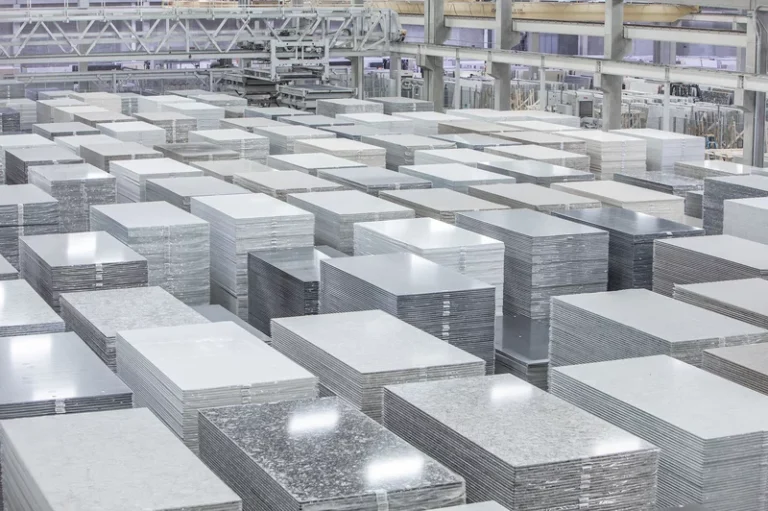
Most people think quartz countertops are just like granite countertops; simply cut, polished, and ready for installation. The truth is very different. Quartz countertops are engineered, not quarried. They’re created by crushing raw quartz, blending it with resins and pigments to create slabs, and then carefully polishing each surface. At Tops Countertops, our team understands the entire process, from fabrication to final installation, including how quartz countertops are made, and we’ve guided countless homeowners in choosing a high-quality, long-lasting countertop material for their kitchen or bathroom.
Understanding how quartz countertops are made is essential for homeowners.
How Are Quartz Countertops Made? The Manufacturing Process Explained
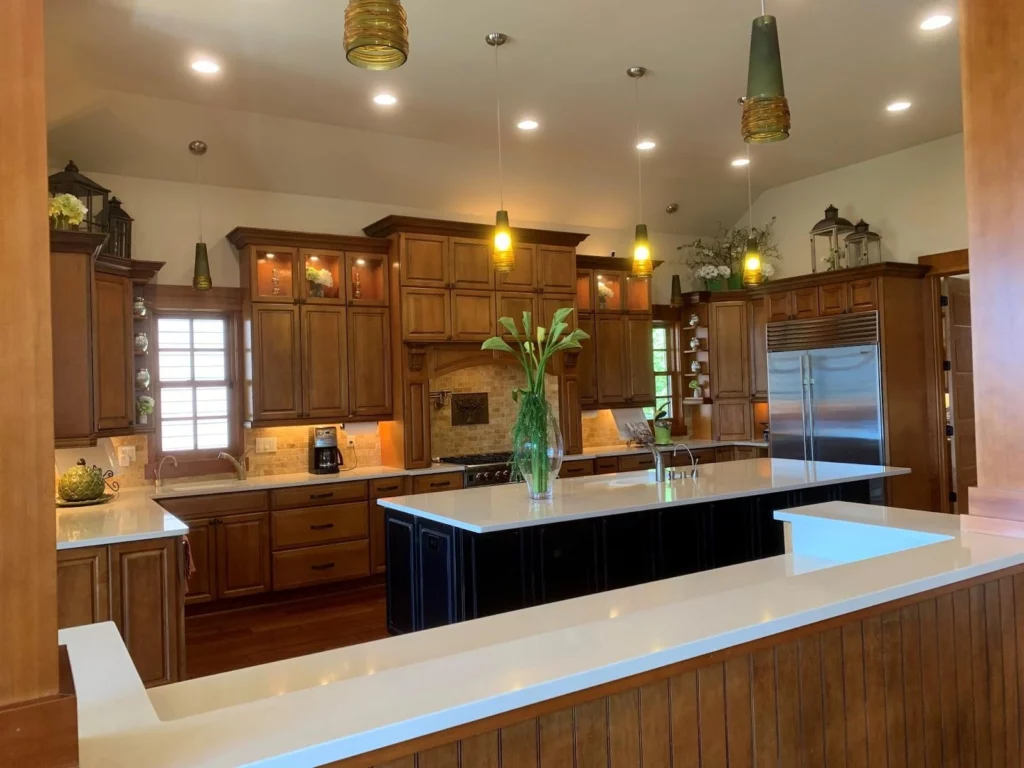 The story of quartz countertops begins long before they’re installed in your kitchen or bathroom. Here’s a detailed behind-the-scenes look at the quartz surface manufacturing process:
Understanding how quartz countertops are made can help you appreciate the craftsmanship and technology involved in creating this beautiful surface.
By learning how quartz countertops are made, you can appreciate their unique qualities.
- Raw materials: It starts with natural quartz, one of the hardest minerals on Earth. The quartz is crushed into fine pieces to prepare it for blending.
- Mixing stage: The crushed quartz is combined with resin and pigments to create strength, durability, and color. This is what makes engineered quartz different from natural stone like granite or marble.
- Molding: The quartz-resin mixture is poured into molds to form a quartz slab. Vibration and vacuum processes remove air pockets, creating a dense, seamless solid surface.
- Curing: Slabs are heated and pressurized, hardening the resin and producing long-lasting quartz surfaces that are resistant to stains and scratches.
- Polishing and finishing: Each slab is ground and polished to showcase its color and veining. Some slabs are designed to mimic materials like granite or marble, offering a natural look with engineered durability.
- Quality checks: Before a fabricator receives the slab, it’s inspected to meet strict high-quality standards.
Understanding the quartz manufacturing process helps explain why this countertop material is so durable, versatile, and consistent compared to natural stone.
Knowing how quartz countertops are made gives insight into their widespread popularity.
From Fabrication to Final Installation: What Does It Mean for Your Home?
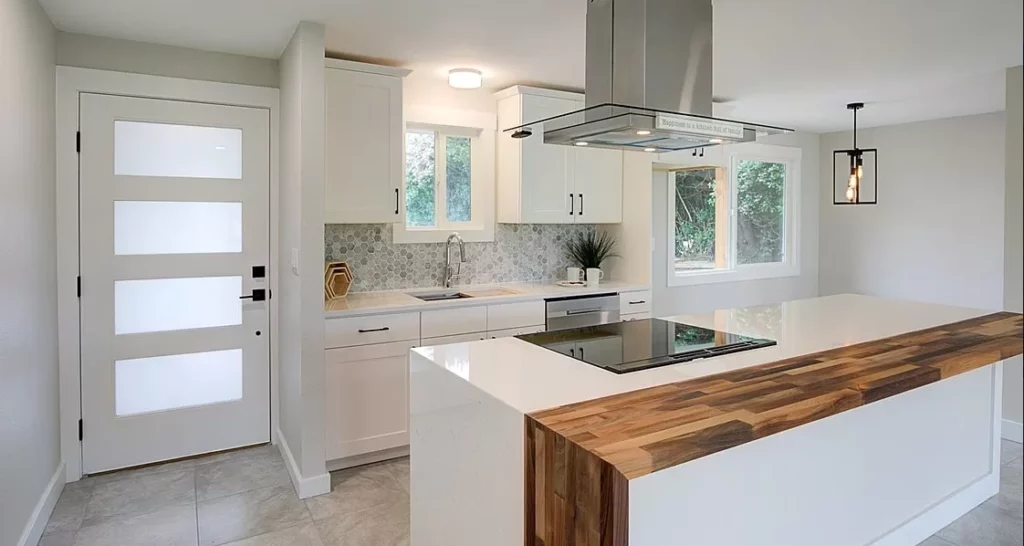 Once a quartz slab is created, the journey isn’t over. What happens next in fabrication and installation determines how well your new surface performs in your home.
Every step in understanding how quartz countertops are made contributes to their value.
-
- Fabrication stage: After leaving the manufacturer, the slab goes to a reputable countertop fabricator. Here, skilled craftsmen and precision CNC machines cut the slab to match your exact kitchen or bathroom layout. Cutouts for sinks, faucets, and appliances are shaped with accuracy, and edges are finished with care.
- Customization: Good countertop fabrication isn’t just about cutting; it’s about details. A professional fabricator ensures seams are placed strategically, so your finished countertop looks seamless. This level of craftsmanship makes the surface both beautiful and functional.
- Professional installation: The next step is handled by an experienced installer. Proper countertop installation means leveling cabinets, securing the slab with adhesives, and joining seams with precision. Just like with granite, quartz requires specialized tools and steady hands.
- Homeowner impact: When done correctly, the final installation delivers a surface that is low maintenance, resistant to stains, and long-lasting. Unlike granite countertops, which require regular sealing because granite is a natural material, quartz countertops are engineered to provide consistent durability without extra upkeep.
- Long-term value: A carefully fabricated and professionally installed quartz countertop is more than just a surface; it’s a high-quality investment. Done with commitment to quality, it adds function, beauty, and peace of mind for years to come.
Investing in quartz involves knowing how quartz countertops are made for better choices.
In short, the journey from slab to final installation is what ensures your quartz countertop delivers on its promise of beauty and durability. With the right fabricator and professional installation, you don’t just get a surface. You get a finished countertop that reflects precision, commitment to quality, and a lasting upgrade to your kitchen or bathroom.
Ready to See Quartz Countertops Up Close?
At Tops Countertops, we emphasize the journey and process of how quartz countertops are made.
FAQs About Quartz Countertops and the Manufacturing Process
Understanding how quartz countertops are made is essential in the decision-making process.
What makes quartz different from natural stone countertops like granite?
The key difference is that granite countertops are cut directly from natural stone, while quartz countertops are engineered. Quartz is crushed into small pieces and combined with resins and pigments to create durable slabs. This makes quartz more consistent in appearance and less porous than granite.
Exploring how quartz countertops are made reveals the innovation behind their design.
How are color and pattern created in quartz slabs?
During quartz surface manufacturing, resins and pigments are added to the crushed quartz mixture. This allows fabricators to mimic materials like granite or marble, or create unique colors and veining patterns not found in natural stone.
Gaining insight into how quartz countertops are made enhances your purchasing confidence.
Are quartz countertops really handcrafted or fully machine-made?
Both. The manufacturing process is machine-driven for consistency, but details like edge profiles, seam placement, and finishing are handled by skilled fabricators. In that sense, every handcrafted quartz countertop is part machine precision and part human craftsmanship.
Does the manufacturing process affect quartz durability?
Yes. Because quartz countertops are engineered, the blend of quartz, resin, and pressure creates a dense, non-porous countertop material. This makes them highly durable, resistant to stains, and ideal for busy kitchens or bathrooms.
Understanding how quartz countertops are made is integral to appreciating their benefits.
How does quartz compare to granite in terms of maintenance?
Unlike granite, which is a natural stone that requires periodic sealing, quartz is non-porous. This makes it a low-maintenance countertop material that only needs basic cleaning. Granite is beautiful and unique, but quartz offers consistent durability with less upkeep.
Your knowledge of how quartz countertops are made can influence maintenance choices.
What should I look for in a fabricator or installer for quartz countertops?
Choose a reputable countertop company that offers expert fabrication and professional countertop installation. Look for precision in seam placement, edge detailing, and a proven track record of quality. At Tops Countertops, our installers deliver commitment to quality with every project.
Ultimately, knowing how quartz countertops are made can lead to a satisfying investment.
It’s crucial to understand how quartz countertops are made when selecting a fabricator.