
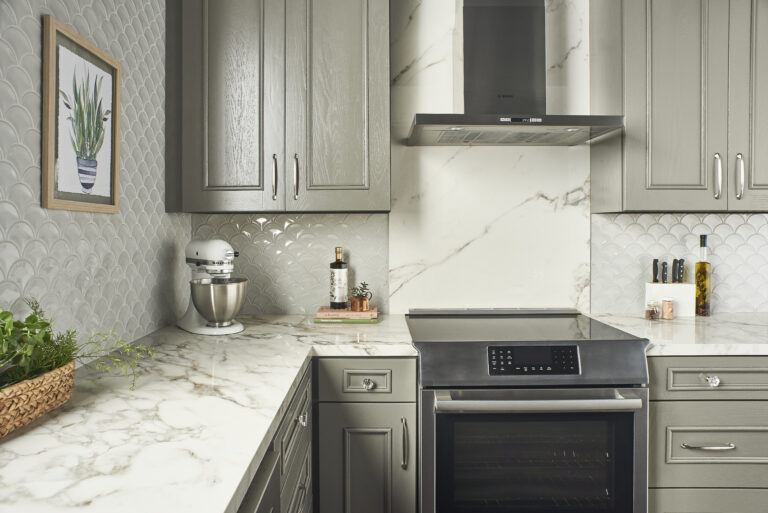
If you’re researching countertop materials for your kitchen, bathroom, fireplace, or outdoor living space, you’ve probably noticed one material appearing more and more often: porcelain.
Once primarily known for flooring and wall tile, porcelain has become one of the fastest growing countertop materials thanks to its impressive durability, realistic designs, and low maintenance. Today, homeowners can enjoy the look of luxurious marble, natural quartzite, concrete, or limestone with a surface that’s built to withstand the demands of everyday life.
But is porcelain the right choice for your home?
The answer depends on your lifestyle, your design goals, and your budget.
At Tops Countertops, we’ve helped homeowners throughout Western Washington compare countertop materials for years. While we’re big fans of porcelain, we’re also honest about when another material may be a better fit. Our goal isn’t to sell you the most expensive countertop. It’s to help you choose the surface that you’ll be happiest with for years to come.
In this guide, we’ll cover everything you need to know before buying porcelain kitchen countertops, including how they’re made, how durable they are, what they cost, how they’re installed, and whether they’re the right choice for your project.
If you’re just beginning your search, we also encourage you to browse our full selection of countertop materials to compare porcelain with quartz, granite, quartzite, marble, and more: https://topscountertops.com/browse/
What Are Porcelain Countertops?
Porcelain countertops are manufactured using refined natural materials such as clay, feldspar, silica, and mineral pigments. These materials are compressed under immense pressure before being fired in kilns at temperatures exceeding 2,000 degrees Fahrenheit.
The result is an incredibly dense, nonporous slab that’s resistant to moisture, stains, scratches, and heat.
Unlike granite or quartzite, porcelain isn’t quarried from the earth. Instead, it’s carefully manufactured to replicate the appearance of natural materials with remarkable realism. Whether you love dramatic marble veining, soft limestone textures, industrial concrete, or warm travertine, there’s likely a porcelain slab that captures the look you’re after.
If you’d like to continue exploring porcelain kitchen countertops, visit our dedicated Porcelain Countertops page. You’ll find additional inspiration, learn more about the material, and discover many of the distributors we work with when ordering porcelain slabs.
https://topscountertops.com/countertop-installation-and-fabrication/porcelain/
If you’re still comparing the advantages and disadvantages of porcelain, we also recommend reading our guide on the pros and cons of porcelain countertops.
Read the Pros and Cons of Porcelain Countertops
Curious about manufacturers? Explore our guide to porcelain countertop brands, where we discuss some of the industry’s leading names, including Neolith, Florim, SapienStone, and more.
Compare Porcelain Countertop Brands
Why Porcelain Countertops Continue to Grow in Popularity
Porcelain offers a combination of beauty and performance that’s difficult to ignore.
Some of its biggest advantages include:
One of the things we appreciate most about porcelain is its versatility.
We’ve fabricated porcelain for kitchens, bathroom vanities, fireplace surrounds, shower walls, laundry rooms, and outdoor kitchens. It performs well in nearly every space where homeowners want a beautiful, durable surface.
That said, we never recommend choosing a countertop simply because it’s popular.
Every home is different.
The best countertop isn’t necessarily the trendiest one. It’s the one that best fits how you use your home every day.
How Thick Are Porcelain Countertops?
One question we hear frequently is:
“Aren’t porcelain countertops really thin?”
Compared to granite or quartz, they certainly can appear thinner.
Most porcelain slabs are manufactured in:
Many kitchen countertops are fabricated using 12 mm porcelain.
If you’d like a thicker appearance, fabricators can create a mitered edge that gives the illusion of a much thicker countertop while maintaining porcelain’s sleek profile.
Thickness alone doesn’t determine durability.
Porcelain’s strength comes from its density, manufacturing process, and proper installation rather than simply how thick the slab appears.
How Durable Are Porcelain Countertops?
Durability is one of porcelain’s biggest selling points.
Porcelain countertops are designed to handle the demands of busy households while maintaining their appearance for years.
Heat Resistance
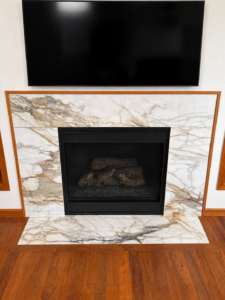
Porcelain is manufactured under extremely high temperatures, making it one of the most heat resistant countertop materials available.
Under normal household use, hot cookware generally won’t damage the surface.
Even so, we always recommend using trivets or hot pads whenever possible. It’s a simple habit that helps protect every countertop material and preserve its appearance over the long term.
Scratch Resistance
Porcelain is exceptionally hard and performs very well against everyday scratches from cooking and food preparation.
However, scratch resistant doesn’t mean scratch proof.
We still recommend using cutting boards, both to protect your countertops and to keep your kitchen knives sharper for longer.
Stain Resistance
One of porcelain’s greatest advantages is that it’s completely nonporous.
Coffee, wine, cooking oils, and many common household spills remain on the surface rather than soaking into the material.
Unlike many natural stones, porcelain countertops never require sealing.
That’s one less maintenance task homeowners have to worry about.
Can Porcelain Countertops Chip or Crack?
This is one of the most common questions homeowners ask us.
The honest answer is yes.
Like granite, quartz, quartzite, and nearly every countertop material, porcelain can chip if enough force is applied in the right location.
Fortunately, the flat surface itself is extremely durable.
The areas most susceptible to damage are exposed edges and corners, particularly if something heavy is dropped directly onto them.
In our experience, the quality of the fabrication and installation is just as important as the material itself.
Porcelain requires specialized cutting equipment, experienced fabrication, careful transportation, and precise installation. Choosing an experienced countertop company can make all the difference in how your countertops perform over time.
What Edge Options Are Available?
Many homeowners assume porcelain only comes with a simple square edge.
Fortunately, today’s fabrication techniques offer much more flexibility.
Popular options include:
Minimalist kitchens often pair beautifully with eased edges, while mitered edges create the appearance of a thicker, more dramatic countertop.
Most porcelain countertops today are fabricated from large format porcelain slabs, allowing for fewer seams and a clean, modern appearance.
If you’d like to learn more, check out our complete guide to large format porcelain slabs.
Read the Large Format Porcelain Slabs Guide
Not sure which porcelain color would look best in your own home?
Try our free Countertop Visualizer, where you can upload a photo of your kitchen or bathroom and experiment with different countertop materials before making your decision.
How Are Porcelain Countertops Installed?
Porcelain installation requires precision from beginning to end.
A professional installation generally includes:
One of the biggest mistakes we see homeowners make is spending weeks researching countertop materials but only a few minutes researching who will fabricate and install them.
Even the highest quality porcelain slab won’t perform as intended if it isn’t fabricated correctly.
Experience matters.
How Much Do Porcelain Countertops Cost?
Porcelain is generally considered a premium countertop material, but there’s no one-size-fits-all price.
The total cost of your project depends on several factors, including:
At Tops Countertops, we believe in being transparent about pricing. Porcelain offers exceptional durability, low maintenance, and long term value, but it isn’t always the most budget friendly countertop option.
If your primary goal is finding the most cost effective surface, we encourage you to browse our other countertop materials as well. Quartz, granite, quartzite, marble, and other options each have their own advantages depending on your project and budget.
If porcelain is still your dream material but you’re concerned about the upfront investment, financing may help make your remodel more manageable.
Learn About Countertop Financing
Ultimately, the best way to understand pricing is with a personalized quote based on your layout, measurements, material selection, and design preferences.
How Do You Clean Porcelain Countertops?
One of porcelain’s biggest advantages is how easy it is to maintain.
For routine cleaning, you’ll typically only need:
For tougher messes, a nonabrasive cleaner approved for porcelain surfaces is usually all that’s necessary.
Since porcelain is nonporous, it doesn’t require sealing like many natural stone surfaces. That means less maintenance and one less thing to remember throughout the life of your countertops.
While porcelain is highly resistant to stains, we still recommend cleaning spills promptly. Good habits help keep any countertop looking its best for years to come.
Who Should Choose Porcelain Countertops?
Porcelain is an excellent choice for homeowners looking for a beautiful surface that’s built to handle everyday life.
It may be the right fit if you want:
Porcelain is also a great option if you’re looking to create a cohesive design throughout your home. Many homeowners choose to use the same porcelain slab for kitchen countertops, bathroom vanities, shower surrounds, fireplace surrounds, and outdoor kitchens to create a consistent, high end appearance.
Who May Want to Consider Another Material?
As much as we like porcelain, we also believe in being honest when another material may be a better fit.
For example, you may want to explore other countertop options if:
If you’re comparing materials, we recommend reading our guide that breaks down the differences between porcelain, quartz, and granite countertops.
Compare Porcelain vs. Quartz vs. Granite
At the end of the day, there isn’t one countertop material that’s perfect for everyone.
The best countertop is the one that fits your home, your lifestyle, your design vision, and your budget.
Frequently Asked Questions
Do porcelain countertops need to be sealed?
No. Because porcelain is nonporous, it never requires sealing.
Can you put hot pans directly on porcelain countertops?
Porcelain is one of the most heat resistant countertop materials available. Even so, we recommend using trivets or hot pads whenever possible to help protect your investment.
Are porcelain countertops good for kitchens?
Absolutely. Their durability, stain resistance, heat resistance, and easy maintenance make porcelain an excellent choice for busy kitchens.
Can porcelain countertops be used outdoors?
Yes. Porcelain is UV resistant, meaning it won’t fade from direct sunlight like some other materials can. That makes it a great choice for outdoor kitchens and entertaining spaces.
Are porcelain countertops better than quartz?
Both are excellent countertop materials, but each has its strengths.
Quartz offers a wide range of colors and excellent durability, while porcelain stands out for its heat resistance, UV stability, and ability to be used indoors and outdoors.
The best choice depends on your project goals and personal preferences.
Continue Your Research
Still exploring your options? These additional resources can help you dive deeper into porcelain countertops and compare them with other materials.
Pros and Cons of Porcelain Countertops
Porcelain vs. Quartz vs. Granite Countertops
Top Porcelain Countertop Brands
Large Format Porcelain Slabs Guide
Is Porcelain the Right Countertop for You?
Porcelain has earned its place as one of today’s most versatile countertop materials.
Its combination of durability, low maintenance, heat resistance, stain resistance, and stunning design options make it an outstanding choice for many kitchens, bathrooms, fireplaces, showers, and outdoor living spaces.
However, choosing the right countertop goes beyond selecting a material. The quality of the fabrication and installation plays a significant role in how your countertops look and perform for years to come.
That’s why we encourage every homeowner to compare materials, ask questions, and work with a team that has experience fabricating the surface they choose.
At Tops Countertops, we’re here to help you make an informed decision, not pressure you into one.
Whether porcelain ends up being the perfect fit or another material better suits your needs, we’ll walk you through your options and help you choose a countertop you’ll enjoy for years to come.
Ready to get started?
Visit our showroom to explore porcelain slabs in person, compare them alongside quartz, granite, quartzite, and marble, or contact our team for a free, no obligation quote. We’d love to help bring your vision to life.