
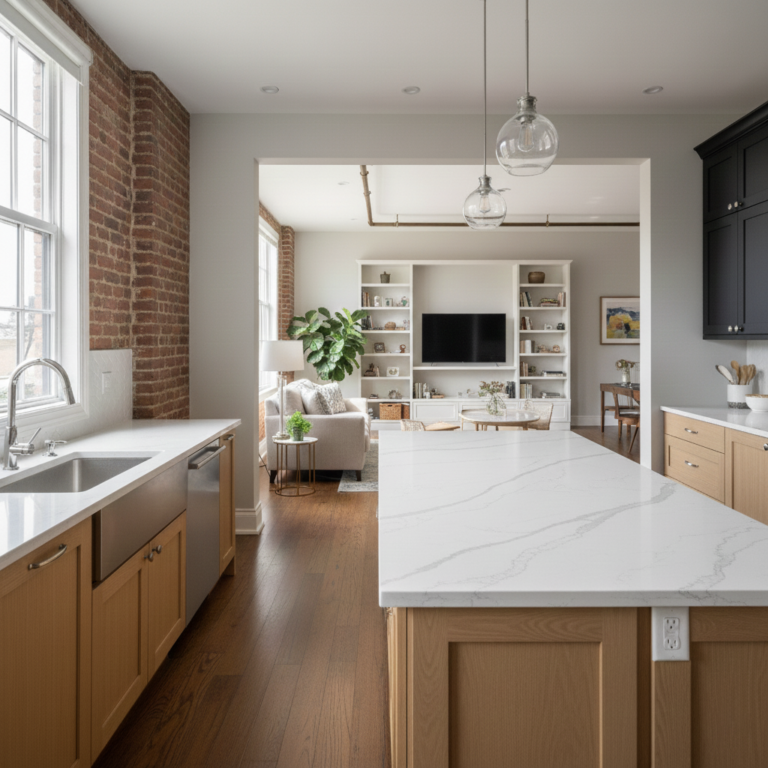
Quartz countertops are known to be low-maintenance, non-porous, and naturally resistant to most spills. But does “low maintenance” mean no maintenance? That’s a common and costly mistake we’ve seen many homeowners make! To keep your quartz countertops truly looking fresh and new for decades, you need a strategy.
As South Sound’s premier fabricator, Tops Countertops sees exactly what happens when proper care is skipped. We’ll show you the simple care and maintenance steps needed to prevent stains and preserve your investment.
What Daily Quartz Countertop Care Should Look Like
Daily care for quartz countertops is simple, but the right habits make a big difference in how long they keep their fresh, clean look.
How to Clean Quartz Countertops the Right Way
The easiest way to maintain quartz is with basic tools. A soft cloth or sponge, mild dish soap, and warm water handle most situations. This approach works because quartz does not need aggressive scrubbing to stay clean. It responds best to simple care.
A quick cleaning routine looks like this:
- Wipe the surface with mild dish soap and a soft cloth.
- Rinse with warm water to remove any leftover cleaner.
- Dry the countertop to prevent water spots.
Because quartz is non-porous, this routine removes spills before they have a chance to discolor or leave residue. It also keeps the finish looking consistently fresh.
What Homeowners Should Avoid During Everyday Use
Daily habits have a big impact on long-term appearance. Cutting directly on quartz can leave scratches that are difficult to repair. Although quartz is heat-resistant, placing hot pots or pans directly on the surface can cause discoloration or stress fractures.
To protect quartz without adding extra work, keep a few essentials close by:
- Cutting boards for prep work
- Trivets or hot pads for hot pans
- Soft cloths for quick cleanup
These simple habits protect the finish, prevent damage, and keep your quartz countertops looking clean without any unnecessary effort.
Which Cleaners Are Safe and Which Can Damage the Surface
Most gentle household cleaners are completely safe for quartz. The products that cause problems are the harsh ones. Bleach, abrasive cleaners, strong solvents, and anything labeled heavy duty can damage the finish over time. Abrasive tools like steel wool scratch the surface, even if the scratches look faint at first.
A common scenario we see is a homeowner trying to remove a stubborn spill with a harsh cleaner. The spill comes off, but the shine dulls in a small patch. It is a simple mistake and one that is easy to avoid with a gentle cleaner and a soft cloth.
How to Protect Quartz Countertops for Long-Term Beauty and Longevity
We’ll go through the simple practices that preserve beauty, prevent dull spots, and protect the finish without adding work to your routine.
What Heat Can Do to Quartz and How to Avoid Damage
Quartz is heat-resistant, but that does not mean it can handle direct contact with hot pots, pans, or appliances. Prolonged exposure to heat can discolor the resin or leave a faint mark that is almost impossible to reverse. A homeowner may set a slow cooker in the same spot every weekend or place a hot pan on the counter for just a moment. Over time, that repeated heat exposure weakens the surface.
To prevent heat damage, keep a few basics within reach:
- Trivets or hot pads for cookware
- Heat mats for small appliances are often used in one place
These simple tools protect the surface and keep your countertops looking fresh and new.
Why Pressure and Weight Matter More Than People Expect
Quartz handles everyday use well, but concentrated weight in the wrong spot can cause stress. Setting a heavy pan directly on an edge, storing small appliances on a narrow overhang, or placing large items near a cutout can all cause long-term pressure on a weak point. Most homeowners never think about this because quartz feels solid and strong, yet it can still be damaged if the force is focused on too small an area.
A small adjustment, like spreading weight evenly or keeping heavy items away from edges, protects the slab and preserves the integrity of the installation.
What You Should Know About Sealing and Quartz
Quartz does not require sealing because it is manufactured as a non-porous material. This is one of the reasons quartz countertops are a popular choice. Some homeowners try to apply natural stone sealers to achieve extra protection, but these products are not designed for quartz. Instead of helping, they can leave a film or discolor the surface.
Understanding that quartz requires no sealing is key to proper care and maintenance. It also means there is one less step to worry about in your long-term routine.
How to Prevent Discoloration and Dulling Over Time
Even though quartz resists stains, long-term exposure to harsh chemicals, abrasive tools, or repeated contact with certain cleaners can dull the finish. Homeowners sometimes use bleach or heavy-duty sprays to clean up after a messy meal, not realizing that these products break down the surface over time.
To keep your quartz countertops looking pristine, stick with a gentle cleaner, avoid using abrasive tools, and wipe spills instead of letting them dry on the surface. These habits protect the finish and help your countertops hold their beauty for years.
The Simple Habits That Keep Quartz Beautiful for Years
The best long-term care is consistent but easy. Wipe down the surface during regular cleaning, avoid placing hot items directly on the countertop, and use a soft cloth or sponge for everyday tasks. These habits take seconds, yet they make a clear difference in how the surface ages.
To keep your countertops looking fresh and new, remember these three basics:
- Clean with gentle products
- Protect from heat
- Avoid abrasive tools or harsh chemicals
Small decisions made daily keep your quartz countertops looking the same as the day they were installed.
Want Your Quartz Countertops to Look Beautiful for Years?
The best way to ensure the long-term beauty and longevity of your quartz is by starting with a high-quality, expertly fabricated surface. At Tops Countertops, we don’t just sell countertops; we are your countertop experts focused on superior service and lasting value.
- Looking to install new, beautiful quartz? Visit our massive indoor slab inventory in Lacey, WA. Skip the long drive to distant vendors and select the perfect slab that is guaranteed to stay pristine with proper care.
- Need guidance on cleaning products? Contact us today! Our design professionals can provide recommendations for product-safe cleaners and offer personalized care and maintenance tips specific to your chosen surface.
As a local, veteran-owned business, we pride ourselves on providing exceptional craftsmanship and reliability that surpasses big-box stores. Choose Tops Countertops for a superior experience from selection to installation.
FAQs: Quick, Clear Answers About Quartz Countertop Care
Do quartz countertops need to be sealed?
No. Quartz countertops never need sealing because they are non-porous. This is one of the main reasons quartz countertops are a popular choice for homeowners who want low-maintenance care. Sealing products designed for natural stone can actually damage the surface or leave a dull film.
What cleaners are safe to use on quartz countertops?
A gentle cleaner is best. Mild dish soap, warm water, and a soft cloth handle daily cleaning without damaging the finish. pH-balanced household cleaners are also safe. Avoid using harsh chemicals like bleach or abrasive cleaners, since they can dull the surface over time.
How do I remove stains without damaging the surface?
Quartz resists stains well, but spills left for too long can leave residue. Start with mild dish soap and warm water. If something stubborn remains, use a non-abrasive cleaner made for quartz surfaces. Avoid harsh chemicals or abrasive tools because they can scratch or discolor the countertop.
Can heat damage quartz countertops?
Yes. Quartz is heat-resistant, but high temperatures can still cause discoloration or weaken the resin if hot items sit directly on the surface. Always use a trivet or hot pad for hot pots and pans to protect the countertop and prevent heat damage.
What should I avoid using on quartz surfaces?
Avoid harsh chemicals like bleach, abrasive cleaners, strong solvents, and anything gritty. Also, avoid using abrasive tools such as steel wool. These products can scratch or dull the finish, making it harder to keep your countertops looking fresh and new.
How often should I clean my quartz countertops?
Wipe them down daily or after cooking. Regular cleaning with a soft cloth and mild dish soap keeps your countertops looking pristine and prevents spills from turning into stubborn marks. This quick routine is usually all the care and maintenance quartz needs.
Can quartz scratch easily during daily use?
Quartz is durable, but it can scratch if you cut directly on the surface. Always use cutting boards to avoid scratching the surface. Small scratches can dull the finish, so simple habits make a big difference in long-term beauty.
How do I keep my quartz countertops looking new for years?
Stick to gentle cleaners, clean spills quickly, avoid harsh chemicals, and protect the surface from heat and heavy pressure. These simple practices keep your quartz countertops looking the same as the day they were installed. If you need recommendations for safe products or care tips, contact us today.