
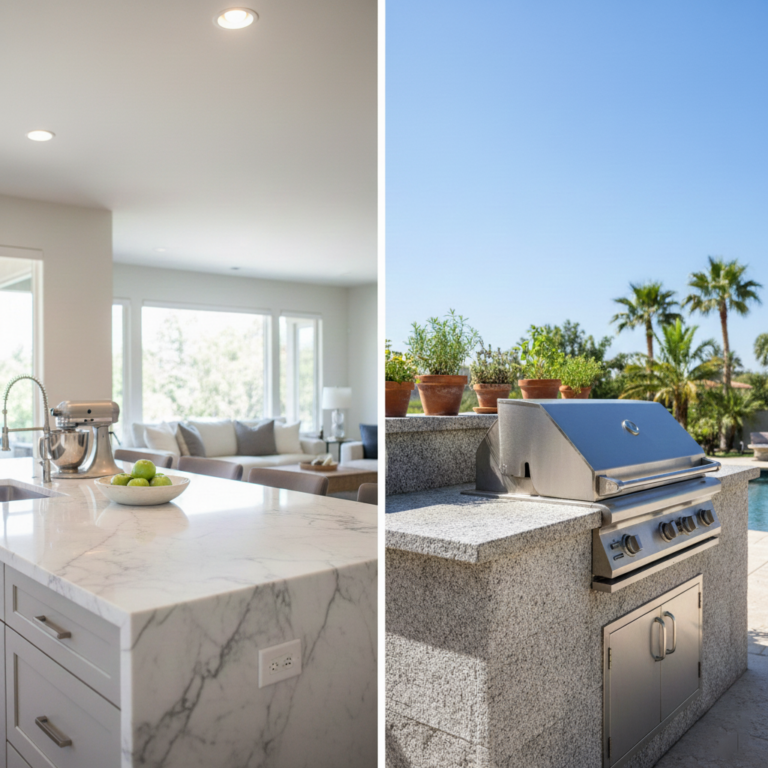
Most homeowners assume a countertop material behaves the same whether it sits in an indoor kitchen or an outdoor kitchen. It doesn’t. The same slab reacts differently once UV, moisture, and temperature swings hit it. A surface that stays durable indoors can stain or fade outdoors.
As a veteran-owned fabricator with decades of hands-on experience, we see these problems before they happen. That is why choosing the right countertop material matters more than people think.
How Indoor Countertop Materials Hold Up Outdoors
Outside, everything changes. Some materials stay durable with simple care. Others fade, stain, or lose strength faster than people expect. Below is how the most common indoor countertops perform when moved into an outdoor kitchen or patio space.
Quartz vs Outdoor Quartz: Why UV Changes Everything
Quartz countertops are one of the most popular choices for indoor kitchens because they are non-porous, easy to clean, and available in a wide range of colours. Indoors, they perform beautifully with minimal maintenance.
Outdoors, the story shifts. Quartz resins do not like UV.
One thing we’ve seen with homeowners who use quartz in fully exposed outdoor kitchens is that the surface often changes on the sun-facing side first. A slab that looks uniform at installation can slowly develop warmer, yellowish tones or patchy fading where sunlight hits it for hours each day. Indoors or under cover, that same material holds its color just fine.
When quartz works outdoors:
- Shaded patios
- Covered porches
- Outdoor kitchens with minimal sunlight
When it does not:
- Open decks
- Spaces exposed to sunlight for most of the day
If a homeowner loves the look of quartz and wants it for outdoor use, outdoor-rated quartz formulas and sun-protected layouts help, but natural stone or porcelain still perform better.
Granite and Quartzite: Why Natural Stone Handles Outdoors Better
Granite and quartzite countertops are strong options for outdoor use because these stone materials already live through extreme temperature swings in nature. UV does not bother them. Heat from hot pots and pans is usually not a problem when used carefully.
Both stones are porous, so regular sealing helps them stay resistant to stains. Once sealed, they hold up well in rain, cold, and summer sun.
Granite in outdoor kitchens:
- Stable in heat
- Holds color outdoors
- Needs simple, regular sealing
Quartzite outdoors:
- Harder than granite
- Durable enough to handle outdoor use
- Veining patterns often mimic the look of natural marble with far better performance
We have done several outdoor granite installations that still look solid years later, as the homeowners keep up with simple sealing. The color remains stable, the surface doesn’t fade, and normal outdoor use doesn’t take away from the stone’s strength.
Quartzite shows similar long-term durability, especially for homeowners who want a harder stone with more dramatic veining.
Marble: Beautiful Indoors, a Maintenance Project Outdoors
Marble has a classic look, but it performs best indoors where moisture, acidity, and UV are controlled. In an outdoor setting, especially in the Pacific Northwest, marble takes on challenges that can shorten its life.
Outdoors, marble can:
- Etch faster from rain and acidic spills
- Absorb stains if not sealed
- Lose polish or dull faster in UV
We’ve seen outdoor marble surfaces develop dull spots and etch marks simply from exposure to rainwater combined with everyday outdoor cooking. Even when sealed, marble reacts to acidity, and outdoors there are more opportunities for that exposure to happen without notice.
Homeowners who love the soft, elegant feel of stones like marble often switch to porcelain slabs that mimic the veining without the outdoor maintenance.
Porcelain and Dekton: When Heat, UV, and Weather Are a Non-Issue
Porcelain slab and Dekton surfaces are some of the best outdoor countertop materials available today. They are engineered to stay stable in UV, resist stains, survive heat, and shrug off moisture. Even darker colors hold up well outdoors.
At Tops Countertops, porcelain is one material we consistently see perform extremely well in full sun. If you have an open patio and no overhead cover, you’ll rarely see fading, staining, or surface changes over time, even after years of exposure.
Why homeowners choose porcelain or Dekton outdoors:
- Highly durable and low maintenance
- UV stable
- Non-porous surface
- Wide range of colours and styles
- Can mimic the look of natural stone, concrete, or marble
For an outdoor kitchen that needs to perform for years with little upkeep, these surfaces are hard to beat.
Soapstone Indoors vs Outdoors: Why It Ages Gracefully
Soapstone is one of the few materials that looks better with age. Indoors or outdoors, it is almost non-porous, stain-resistant, and heat-tolerant. In an outdoor kitchen, it develops a faster patina, which gives it a weathered, lived-in appearance that many homeowners love.
Soapstone outdoors brings:
- Natural darkening that fits outdoor living spaces
- Durability without needing a sealer
- Resistance to stains, moisture, and heat
Soapstone countertops remain one of the best choices for homeowners who want a natural stone that can handle outdoor use without constant maintenance.
A Simple Decision Framework for Choosing Indoor vs Outdoor Countertops
If all the material options feel overwhelming, this three-step framework helps narrow the right choice quickly and confidently.
Step 1: Start With Sun Exposure
Full sun changes everything. Outdoor spaces that get direct sunlight most of the day perform best with porcelain, Dekton, granite, or quartzite. These materials stay stable in UV and heat.
Shaded or fully covered outdoor kitchens open the door to quartz, though natural stone and porcelain still hold up better long term.
Step 2: Be Honest About Maintenance
If you want low or no maintenance, porcelain or Dekton are the easiest paths. They do not need sealing and shrug off stains and moisture.
If you are comfortable with simple sealing once a year, granite or quartzite reward you with natural beauty and strong outdoor performance.
Step 3: Decide What Matters Most
If the look of marble is the priority outdoors, porcelain slabs that mimic marble give you the style without the maintenance risk.
If heat tolerance and durability matter most for grilling and outdoor cooking, granite or quartzite are reliable choices. If easy daily cleaning is the priority indoors, quartz remains one of the best options.
When homeowners walk through these three steps, the right countertop material usually becomes obvious. It shifts the decision from trends to performance, which is what makes countertops last.
Choosing the Right Countertop for Each Space: Practical Rules That Actually Hold Up
After years of installing countertops across the South Puget Sound, these are the guidelines that consistently help homeowners land on the right material without regret.
Rule 1: Outdoors Needs UV Stability and Weather Proofing
Outdoor kitchens deal with challenges that indoor kitchens never see. Sun exposure is the biggest one. If a countertop gets four or more hours of direct sunlight, you need a surface that can stay stable in UV and handle weather without losing color or strength.
Best choices for sunny outdoor kitchens:
- Granite
- Quartzite
- Porcelain
- Dekton
If the outdoor cooking space is shaded or fully covered, quartz becomes an option, but natural stone or porcelain still performs better long term.
Rule 2: Indoors Focuses on Cleaning, Color, and Daily Wear
Indoor kitchens live a different kind of life. Spills, cooking habits, and cleaning routines matter more than UV.
What works indoors:
- Quartz, because the non-porous surface is easy to clean
- Porcelain slabs, especially in modern kitchen design
- Marble, for homeowners who love the look and understand the sealing routine
Indoors, you can prioritize color and style without worrying about weather damage.
Rule 3: Know the Reality of Maintenance, Not the Myth
Maintenance is the one area where homeowners most often hear mixed messages. You may have been told granite never needs a sealer. You may have heard marble is too fragile for real cooking. The truth is simpler. Every porous stone needs sealing from time to time, even granite and quartzite.
Marble needs a bit more attention, especially in busy kitchens where spills happen fast. Porcelain and Dekton barely need anything at all. Once you move outdoors, the maintenance shifts again. Exposure to moisture and temperature changes wears down sealers faster, so any porous stone will need extra care to stay protected.
Rule 4: Think of Color and Finish as Durability Tools
Color and finish shape more than style. They influence how your countertops behave day to day. Lighter colors in outdoor kitchens tend to hold their look longer because they fade less in the sun.
Dark slabs warm up quickly and can get hot to the touch, which surprises many homeowners. The finish matters too. A honed surface hides scratches and wear better than a polished one, especially in outdoor spaces with heavy use. These small choices make a big difference in how long your countertops stay looking new without constant upkeep.
Rule 5: Match the Material to the Lifestyle, Not the Trend
A countertop should support how a homeowner uses their kitchen, indoors or outdoors. Trendy colors and patterns can be tempting, but performance matters more over time.
Examples that help decisions click:
• Frequent grilling: choose something that can handle hot things, like granite or quartzite
• A remodel focused on veining: consider porcelain that mimics marble without the outdoor maintenance
• Low maintenance households: pick non-porous materials or stones that only need simple sealing
The best countertop is the one that fits real habits, not the one that only looks good in photos.
Visit Our Showroom to Learn More About Indoor and Outdoor Countertops
Ready to choose the right countertop for your indoor or outdoor space. Visit our Design Center in Olympia and compare granite, quartz, quartzite, porcelain, and more in person. Our team will walk you through each material so you know exactly what will hold up in your home. Schedule your design consultation today.
FAQs: Quick, Clear Answers for Homeowners
What is the best material for outdoor countertops in the South Puget Sound area?
Porcelain, Dekton, granite, and quartzite perform best outdoors here. They handle UV, moisture, and temperature swings without losing color or strength. Porcelain and Dekton need almost no maintenance, while granite and quartzite only need simple sealing.
Can quartz be used outdoors safely?
Quartz can work outdoors in shaded or covered areas, but it is not ideal for spaces exposed to direct sunlight. UV can cause yellowing or fading over time. Natural stone or porcelain still performs better long-term.
How often do granite or quartzite outdoor countertops need to be resealed?
Most homeowners reseal granite or quartzite outdoors once a year. Some stones hold a sealer longer, but outdoor moisture and temperature changes shorten the lifespan. A quick water test on the surface will show when it is time for another coat.
Is porcelain better than granite for an outdoor kitchen?
For many homeowners, yes. Porcelain is non-porous, UV stable, stain-resistant, and almost maintenance-free. Granite holds up well outdoors, too, but needs periodic sealing. Both are strong options, but porcelain offers easier upkeep.
What countertop materials hold up best to heat and sun exposure?
Porcelain, Dekton, granite, and quartzite handle heat and UV the best. Marble and quartz are more sensitive to outdoor light and temperature changes.
Which indoor countertop materials require the least maintenance?
Quartz and porcelain need the least daily care in an indoor kitchen. Both are non-porous and resist stains. Granite is also easy to maintain with simple sealing.
What materials stain most easily in outdoor kitchens?
Marble and unsealed natural stone stain the fastest outdoors. Tile countertops also stain in the grout lines. Non-porous surfaces like porcelain stand up much better to outdoor spills.
Can I put hot pots and pans directly on stone countertops?
Natural stones like granite and quartzite can handle short bursts of heat, but direct contact is not recommended. Sudden temperature changes can cause stress fractures. Quartz should never receive direct heat. Porcelain and Dekton tolerate high heat the best.